


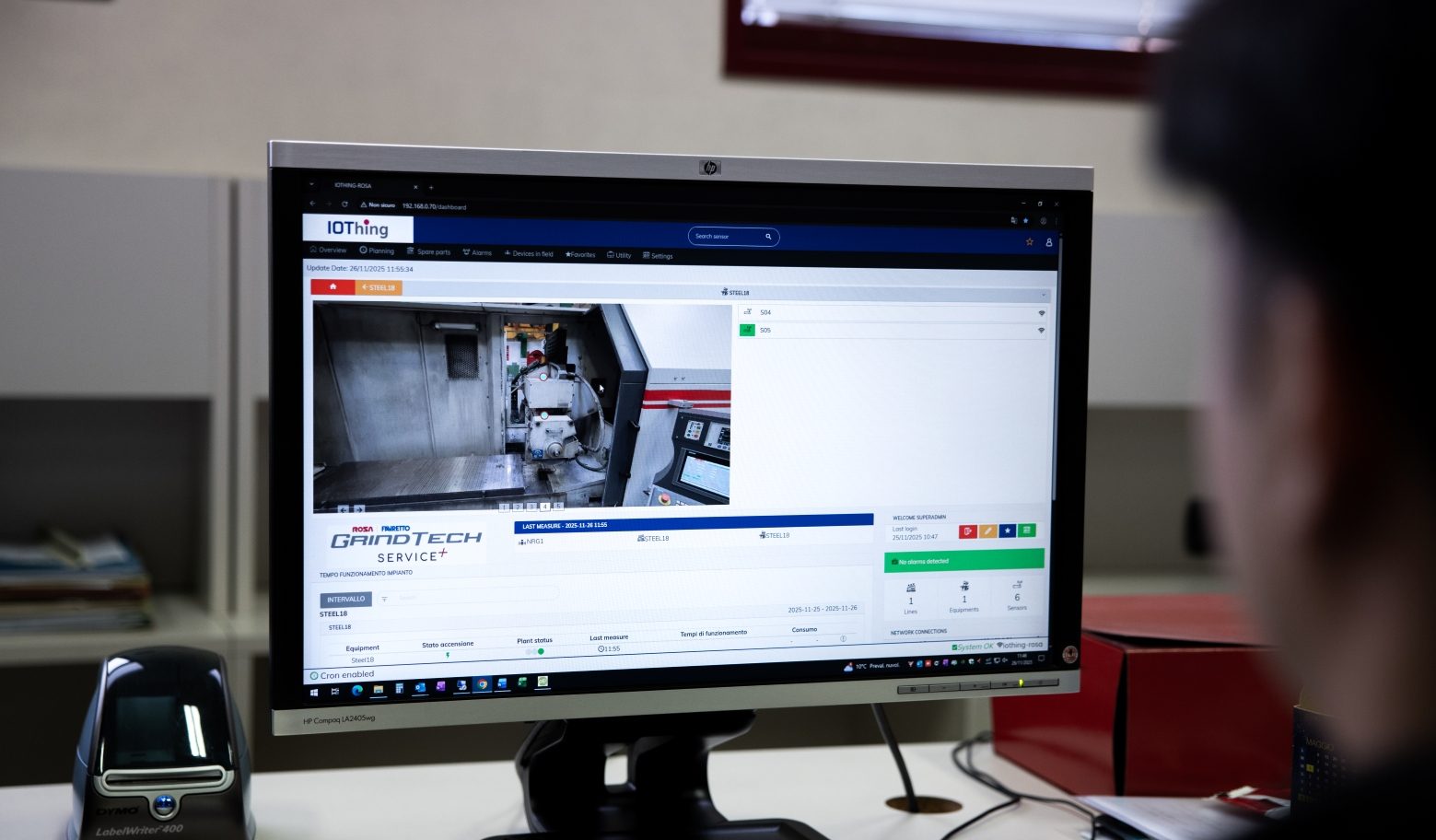
GrindTech Service+: Digital Support for Grinding Machines
GrindTech Service+: Digital Support for Grinding Machines
Today, the efficiency of a grinding machine depends not only on its mechanical performance, but also on the ability to manage, monitor, and support it over time. For this reason, we complement our machines with a digital service ecosystem designed to extend their value throughout the entire lifecycle.
It is within this context that GrindTech Service+ comes into play: our connected services system that supports customers through the various stages of machine operation and makes interaction between operators and technical support more immediate and effective. The goal is to simplify day-to-day plant management, improve operational continuity, and reduce the impact of critical issues on the production process.
The model is based on a technical support system that enables remote intervention. Through an edge device connected to both the machine and the customer’s network, the service team can access the machine and view in real time the same information available to the operator, such as alarms, notifications, and operational status. This makes it possible to quickly analyze anomalies, adjust machine parameters when necessary, and support application-related activities such as the setup of grinding cycles.
The edge device is integrated with a web-based platform that centralizes data, technical documentation, and service requests. Customers can access information related to their machines, store manuals in the cloud, and manage support requests through a ticketing system that tracks every intervention throughout its entire lifecycle. This ensures information continuity between the workshop and the service department, while maintaining a complete history of all activities associated with each machine.
The platform also integrates communication tools such as chat, video calls, and an interactive whiteboard, enabling real-time sharing and editing of technical drawings and diagrams. This facilitates remote operational support and makes information exchange between operators and technicians faster and more effective.
Thanks to this approach, today approximately 60% of operational issues can be handled remotely. When on-site intervention is required, technicians can work more efficiently, having already analyzed the situation and prepared a preliminary diagnosis.
Completing the system is a range of advanced functionalities dedicated to machine performance monitoring: Energy Monitoring for tracking energy consumption, Event Recorder for logging machine events, Vibration Analysis for monitoring critical components, and AI Assistance with suggestions for managing the most common anomalies.
The entire ecosystem is fully compatible with Industry 4.0 requirements and guarantees high security standards, while leaving customers in full control of access permissions, connection methods, and the machines on which interventions can be performed.

Author